





The days of sitting on hold and pressing buttons to navigate a phone menu may be numbered. Customer experience provider NiCE has opened a new Sydney headquarters and is rolling out an AI platform across Australia that replaces those automated menus entirely with AI agents that customers can simply talk to.
The push is backed by NiCE’s $1.35 billion acquisition of Cognigy, a German-built AI platform, in September 2025. NiCE (NASDAQ: NICE), which reported $4.18 billion in annual revenue for 2025, has appointed Nigel Lindsay-Smith as its new ANZ Managing Director and is expanding from Sydney into Melbourne.
How the AI replaces phone menus
Instead of navigating “press 1 for sales, press 2 for service” menus, callers speak directly to an AI agent. The system can understand multiple issues in a single conversation. A caller who rings their telco about both an incorrect bill and a plan upgrade would have both handled in one interaction, rather than being transferred between departments.
“What could have taken weeks before can actually be developed and deployed in days,” Lindsay-Smith told iTWire. Cognigy acts as a connecting layer that works across different AI models and contact centre systems, so businesses are not locked into a single technology provider.
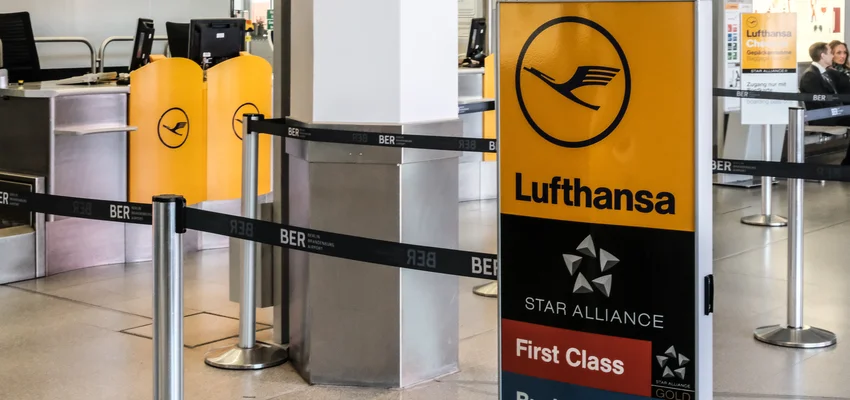
Lufthansa runs millions of AI calls
The platform is already operating at large scale overseas. Lufthansa Group processes approximately 16 million AI-powered conversations per year through Cognigy, according to NiCE. On peak disruption days, such as when flights are cancelled en masse, the system handles around 40,000 simultaneous conversations.
Allianz, Generali, and BT’s Openreach are also using the platform. At NiCE’s Nexus 2026 summit, the company announced new features including a tool that analyses existing call data to identify which types of enquiries could be handled by AI agents.
Australian businesses eager but cautious
Lindsay-Smith described the Australian market as keen to adopt AI but hesitant about moving from trials to live deployment. Recent high-profile AI missteps locally have made organisations careful about putting AI directly in front of customers.
“We have visibility, a lot of visibility, when there are errors made,” Lindsay-Smith said. “There have been a couple in the press recently where AI has taken a slight turn and operated slightly differently than was originally expected.” The platform addresses this by giving organisations fine-grained control over what topics the AI can discuss and what actions it can take.
Routine calls could shift to AI
The clearest financial case is in handling routine enquiries. Lindsay-Smith estimated that a single phone call costs a contact centre between $10 and $30 depending on efficiency. Billing questions, statement requests, address changes, and payment extensions are all tasks an AI agent could manage without human involvement.
NiCE’s own research, published in its Agentic AI CX Frontline Report in February 2026, found that businesses using AI agents resolved more than 80% of straightforward enquiries without needing a human operator. Those businesses also reported deployment times up to three times faster and customer satisfaction improvements of up to 20%.
Full context travels with callers
When the AI determines a call needs a human, such as financial hardship situations or conversations that are going off track, it hands over the full context. The human operator sees a summary of everything discussed and a prediction of what the customer likely needs.
This addresses one of the most universal frustrations with call centres: having to explain the same problem to every new person. The context travels with the customer, so the conversation picks up where it left off rather than starting over.

Younger customers already expect AI
Lindsay-Smith pointed to a generational shift already underway. His own son, about to turn 21, has never contacted a call centre. He handles everything through digital channels and does not distinguish between human and AI assistance, as long as the problem gets solved.
That generation is becoming the dominant customer base. Brands that cannot offer instant, competent digital service risk losing them entirely. NiCE is betting that the shift will accelerate demand for AI-powered contact centres across Australian industries including banking, telecommunications, and insurance.
Phone menus face an overdue replacement
The shift from rigid automated menus to conversational AI reflects a long-overdue change in how large organisations handle customer contact. NiCE’s near-billion-dollar acquisition and immediate Australian expansion signal that global providers see the local market as ready for real deployment, not just trials.
Early numbers tell a compelling story. Resolving 80% of routine calls through AI, with measurable cost savings and faster rollout, gives Australian decision-makers the kind of hard evidence they typically need before committing. Lufthansa’s scale proves the technology works beyond the pilot stage.
NiCE’s parallel expansion into Sydney and Melbourne suggests a long-term play rather than a short sales push. Whether Australian enterprises respond with production deployments in 2026 will be the strongest signal yet of how ready the local market truly is.
Businesses exploring how AI chatbot solutions can transform their customer service operations will find this shift worth watching closely. For more on how Australian companies are adopting AI automation, visit Aivy.



