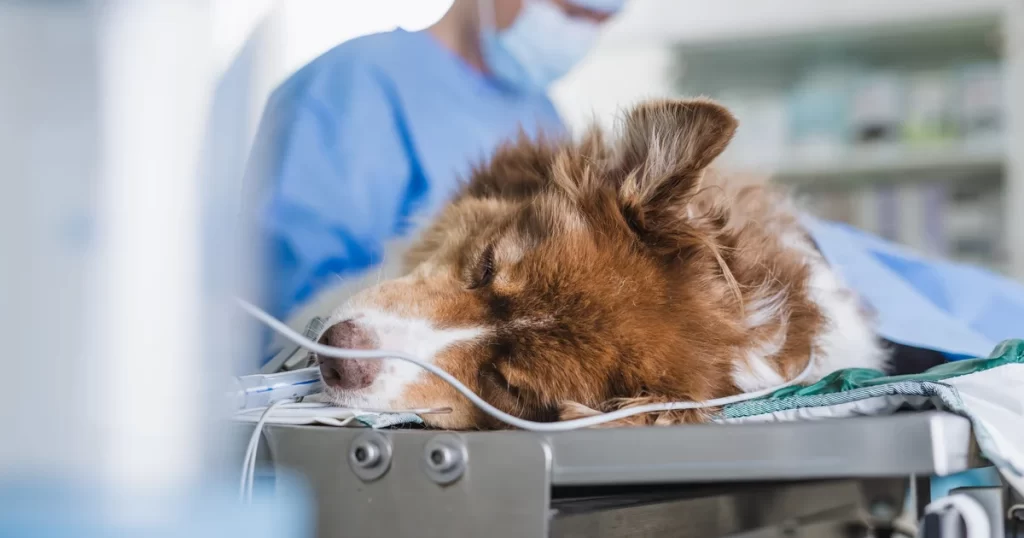




A Sydney tech entrepreneur with no medical background has used ChatGPT, Grok and Google’s AlphaFold to help design a personalised mRNA cancer vaccine for his eight-year-old rescue dog. Most of the tumours have since shrunk, and the dog is back chasing rabbits at the park.
Paul Conyngham is not a doctor. He is an electrical engineer turned tech entrepreneur who co-founded Core Intelligence Technologies and served as a director of the Data Science and AI Association of Australia. But when veterinarians told him his Staffordshire bull terrier cross, Rosie, had only months to live after chemotherapy and surgery failed to stop her aggressive mast cell tumours, he decided to apply the tools he knew best.
The story has since been covered by Fortune, Newsweek and The Conversation, landing somewhere between inspiration and warning. Oncologists have cautioned that a single case does not constitute proof of a treatment. But the details of what Conyngham achieved, and how, are difficult to dismiss.
From ChatGPT to custom vaccine in four steps
The process began with genomic sequencing. Conyngham contacted Martin Smith, director of the University of New South Wales Ramaciotti Centre for Genomics, and paid $3,000 to have Rosie’s DNA and tumour DNA sequenced. The result was a detailed map of the mutations driving her cancer.
He then used ChatGPT to develop a research plan, asking the model how scientists design personalised cancer vaccines and how to move from a list of mutations to potential treatment targets. He also used Google DeepMind’s AlphaFold protein structure prediction tool to identify which mutated proteins might be visible to the immune system.
Conyngham then turned to Grok, xAI’s chatbot, to design the mRNA vaccine sequence itself. The vaccine was designed to boost production of tumour-associated antigens, enabling Rosie’s immune system to identify and destroy the cancer cells.
“I went to ChatGPT and came up with a plan on how to do this,” Conyngham told The Australian.
Paid $3,000 to UNSW Ramaciotti Centre for Genomics to sequence Rosie’s tumour DNA and identify cancer-driving mutations.
Used ChatGPT to build a research plan, AlphaFold (Google DeepMind) to identify mutated proteins, and Grok (xAI) to design the mRNA vaccine sequence.
UNSW RNA Institute director Pall Thordarson synthesised the personalised mRNA vaccine in under two months. First-ever bespoke cancer vaccine for a dog.
Injection in December 2025, booster in February 2026. Most tumours shrank significantly. Rosie is back chasing rabbits at the park.
From digital design to physical vaccine
With the AI-generated vaccine design in hand, Conyngham approached Pall Thordarson, director of UNSW’s RNA Institute, to ask if the university would synthesise it. Thordarson’s team turned the digital blueprint into a physical mRNA vaccine in less than two months.
The vaccine was a one-off product, made exclusively for Rosie, encoding several of the specific mutations found in her tumour. It works on the same principle as COVID-19 mRNA vaccines: the injected mRNA instructs the body’s cells to produce small protein fragments that train the immune system to recognise and attack the cancer.
“This is the first time a personalized cancer vaccine has been designed for a dog,” Thordarson told The Australian. “This is still at the frontier of where cancer immunotherapeutics are — and ultimately, we’re going to use this for helping humans.”
The regulatory battle took longer than the science
Building the vaccine was not the hardest part. Getting permission to inject it was.
Conyngham spent three months navigating Australian bioethics approval, dedicating two hours every evening to writing a 100-page application document. Even then, UNSW researchers were not granted permission to administer the vaccine themselves.
Rachel Allavena, a canine immunotherapy professor at the University of Queensland with experience obtaining ethics approvals for experimental treatments, helped cut through the paperwork. Conyngham and Rosie travelled to Brisbane, where the vaccine was injected in December 2025. A booster dose followed in February 2026.
“The red tape was actually harder than the vaccine creation,” Conyngham told The Australian.
Rosie’s response and what it means
Within weeks of the first injection, most of Rosie’s tumours had shrunk visibly. Her overall tumour burden dropped, and her energy returned. One resistant tumour has since prompted a second round of analysis and a follow-on vaccine targeting different mutations.
“In December she had low energy because the tumors were creating a huge burden for her,” Conyngham said. “Six weeks post-treatment, I was at the dog park when she spotted a rabbit and jumped the fence to chase it.”
Martin Smith, director of the UNSW genomics centre, posed the question that has resonated most widely: “It raises the question, if we can do this for a dog, why aren’t we rolling this out to all humans with cancer?”
The answer, for now, is that this is a single case with no control group. Mast cell tumours can behave unpredictably, and oncologists have cautioned that it is too early to draw broad conclusions. A detailed analysis published by The Conversation noted that while the science is sound, a personalised approach remains experimental and unproven at scale.
The $3,000 question: when does AI medicine go mainstream?
The Rosie case illustrates a shift in how advanced science can be accessed. DNA sequencing costs have fallen dramatically, with Element Biosciences planning to offer whole genome sequencing for $100 in the near future. AI tools like ChatGPT and AlphaFold can help non-specialists navigate complex biological data. And mRNA technology, proven at global scale during the pandemic, provides a rapid manufacturing pathway for custom treatments.
None of these tools worked in isolation. Conyngham still needed university researchers to review the data, synthesise the vaccine and administer it under ethical oversight. But the barrier to entry for designing a personalised treatment has dropped from a pharmaceutical company budget to a motivated individual with $3,000 and access to AI.
Matt Shumer, CEO of OthersideAI, captured the broader sentiment on X: “This is what I mean when I say the world is going to get very weird, very soon. Expect more stories like this, each sounding increasingly more insane.”
A cautious milestone
Rosie’s story sits at the intersection of personalised medicine, mRNA technology and artificial intelligence. It is not a cure, and it is not a clinical trial. Conyngham himself has said he is under no illusion about the limitations.
What it demonstrates is that the building blocks of advanced cancer treatment are becoming more accessible. Genomic sequencing, protein structure prediction and mRNA vaccine design are no longer confined to large pharmaceutical laboratories. The question now is whether the regulatory and medical systems can adapt quickly enough to test and, where appropriate, scale what individuals like Conyngham have shown is possible.
Rosie, for her part, is still chasing rabbits.