
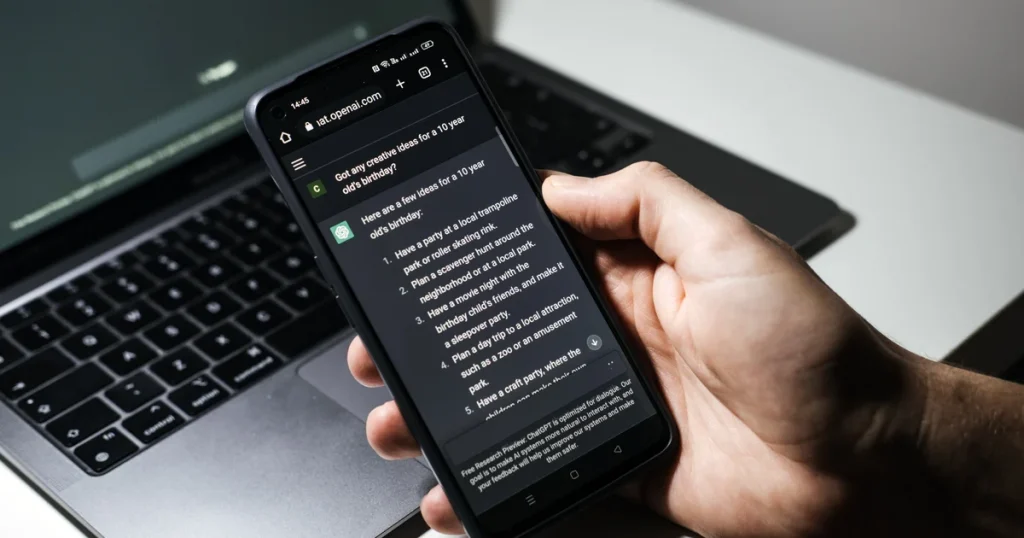




Airtasker has moved its marketplace inside ChatGPT. Since 13 August, someone can describe a job in plain language and have the assistant write the task, compare offers from Taskers and book the work, without opening the Airtasker app or website. The company says it is the first local services marketplace to offer the full flow inside a chat.
The integration runs on Airtasker’s own MCP server, and that is the part worth paying attention to. A plugin puts a business inside one assistant. An MCP endpoint makes the same operations callable by any agent, which is a much larger commitment than a listing.
What the integration actually does
Posters describe the work they need and ChatGPT drafts the task description, suggests a budget and helps assign a Tasker, according to SmartCompany. Taskers get the other side of the same interface: they can find nearby jobs, make offers and compose proposals inside the chat.
It is live in Australia, the United Kingdom and the United States, on both mobile and web, Airtasker says. Two thirds of the tasks on the platform are hands on local work such as removals, cleaning and trades, which is precisely the category an assistant cannot finish on its own.
The announcement landed on 13 August and the Australian trade press picked it up the following day. Airtasker framed it as closing the distance between asking for help and getting it, rather than as another surface for its listings.
Payments stay outside the chat
One design decision stands out. Payment runs through Airtasker, not through ChatGPT, so card details never enter the conversation. That keeps the transaction inside a system already built for disputes, refunds and identity, and it avoids handing a payment surface to a model.
It is a sensible template for anyone considering the same move. The assistant handles discovery and intent. The business keeps the money, the record and the liability.
The MCP server is the reusable part
The same MCP server that powers the ChatGPT integration can be pointed at other agents, Claude and Cursor among them. For teams already running AI agents and MCP, that is the difference between a marketing channel and an interface.
Once marketplace operations are exposed this way, an agent configured by someone else can act inside them. Access controls, rate limits and an audit trail stop being optional at that point, because the caller is a model rather than a person with a login history.
Why Australian businesses should pay attention
The pattern generalises well beyond gig work. Any business whose customers describe a need in words before they buy is now competing for a place inside the assistant, not only for a place on the results page. That is a different discipline from ranking, and it is what appearing in AI answers is about.
The commercial signal sits in the numbers Airtasker published. Tasks booked through AI average 20% higher value than the marketplace average. Higher intent is arriving through the chat, not lower.
There is a support consequence too. When first contact happens in a window the business does not own, the conversational AI on the business side has to pick up context an external assistant hands over, rather than starting from scratch.
For smaller Australian operators the risk is asymmetric. A marketplace can afford to build an MCP server; a two person trades business cannot, and its route into these conversations runs through whichever platform it already sells on. Choosing that platform now carries more weight than it did last year.

Where chat native commerce goes next
Marketplaces with a physical fulfilment step have the clearest case for following. The assistant genuinely cannot complete the job, so the handover has obvious value and the margin survives it.
The harder question is for everyone else. If a customer can finish a booking without leaving the chat, businesses that still require a click out to a website are competing against a shorter path rather than a better offer.
Chief executive Tim Fung put the gap plainly: AI could tell people what they needed, but it could not show up in person to fix it. Closing that gap is a distribution decision rather than a technical one, and the Australian businesses watching this launch should read it that way.



