
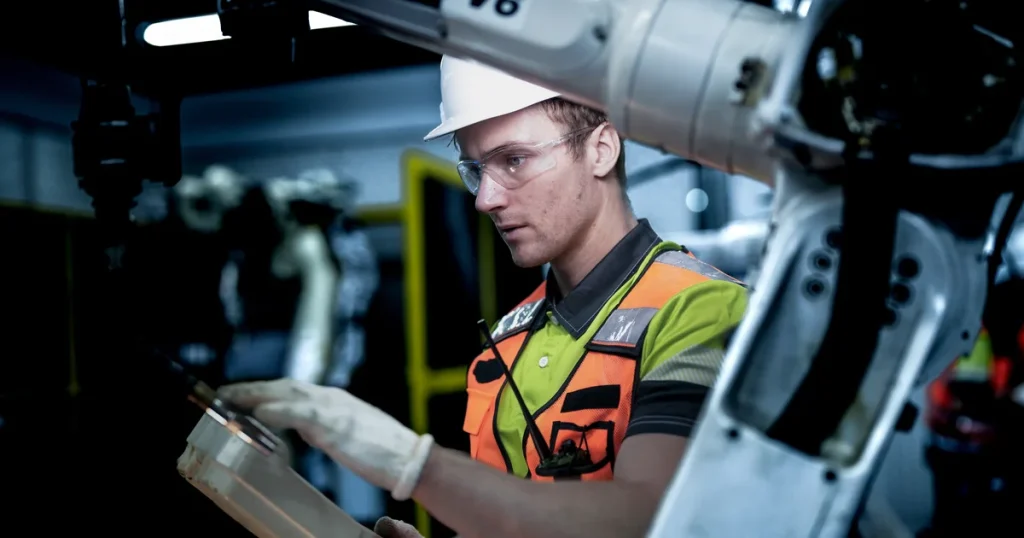




Anthropic opened a research preview on 27 August of something it calls the Model Hardware Standard, a shared specification that lets an AI agent operate physical equipment. Not a chatbot for scientists. An agent that runs the microscope, the liquid handler and the robotic arm at the same time, and adjusts what it is doing as the results come in.
The pitch is narrow and specific: scientific research labs and advanced manufacturing. But the problem it solves is the one every operations manager already recognises. Machines from different vendors do not talk to each other, and getting them to takes a specialist and a lot of weeks.
What the standard actually does
MHS is a standardised driver. It gives every device the same small set of commands, read and write, so an agent can ask a machine for its temperature or set one without a bespoke translator sitting in between. It also makes each device discoverable, so agents and instruments can find each other across a network.
The clever part is the tagging. Much of what you need to know about a machine has never been in the code: the weight of a robot arm, what it can safely measure, where its limits sit. That knowledge lives in paper manuals and in the heads of the people who use it. MHS lets you write it in plain language, or have an agent interview you about your setup, and it produces a reference file the agent can work from, according to Anthropic.
It is model agnostic and works with any device that has a programmable interface. Agents reach it through three routes: the Model Context Protocol, a command line, or code files. That MCP link matters, because it means the plumbing Anthropic built for software agents last year now reaches into hardware.
The numbers from the first partners
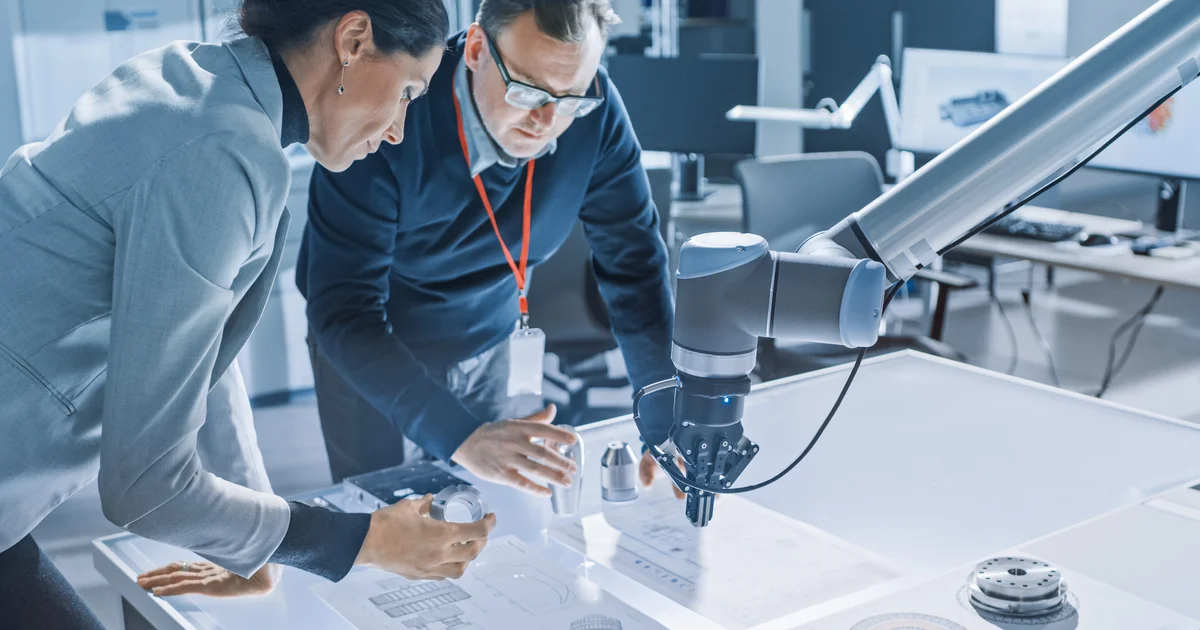
Anthropic published results from the labs that tested it, and they are more concrete than most launch claims. At Carnegie Mellon, researchers ran dose response experiments about three times faster, with one agent orchestrating a liquid handler, a plate reader, a robotic arm and monitoring cameras spread across three computers with incompatible interfaces.
At QuEra, which builds quantum computers, an agent given control of part of the laser system built a controller that recovers the laser lock, the precise frequency the lasers have to hold, 99.3 per cent of the time without a human, as CNBC reported. At HHMI Janelia a researcher unified a microscopy rig that had previously needed seven separate vendor programs. Genentech automated a protein assay across three instruments.
The vendor list is the other signal. Amazon Web Services, Universal Robots, Doosan Robotics, Danaher, QIAGEN, Tecan and Automata are all building support in. So are Raspberry Pi and Hugging Face, the model repository Nvidia is reported to be buying, which is adding MHS to its robotics library.
Why a standard and not a product
Anthropic is not selling lab software. It is trying to own the layer underneath, the same move it made with the Model Context Protocol for software tools. A standard that everyone adopts is worth more than a product that competes, especially when your model is the one most likely to be driving it.
That is also why the open source promise matters. Anthropic says it will release the standard publicly once it has built safety evaluations with its launch partners. Until then it is a waitlist, which is a reasonable thing to be sceptical about until the code actually lands.
What it cannot do yet
Anthropic is unusually direct about the limits. Claude learns about the physical world through text and images, so its spatial reasoning is weak in ways that matter when something is moving. The example they give is telling: Genentech researchers had to teach it that foaming in a protein sample was a physical failure, not a software bug.
It also does not work with hardware that has no programming interface, which rules out a good deal of what is actually sitting on factory floors. Anthropic says it is working with manufacturers to add drivers, which is another way of saying this is a multi year project rather than something to deploy next quarter.
Why Australian businesses should care
Most Australian businesses do not run a microscope. But the pattern here is the one that decides whether automation projects succeed anywhere: the cost is almost never the intelligence, it is the integration. Weeks of specialist work to make two systems talk is the same tax whether the systems are instruments, an ERP and a warehouse scanner, or accounting software and a CRM.
For the sectors that do run instruments, and Australia has plenty in mining assay labs, agricultural research, pathology and food processing, this is worth tracking rather than adopting. The honest position today is that it is a preview with a waitlist and real physical limits.
The transferable lesson is cheaper. Before any agent project, the question worth answering is which of your systems expose a programmable interface and which do not, because that line predicts what is automatable more reliably than any vendor demo. That belongs in the same review as any other AI strategy decision, alongside a clear view of what agentic AI actually means.
The plumbing is the product
The interesting thing about MHS is not that Claude can move a laser. It is that Anthropic keeps shipping connective tissue rather than features, and the connective tissue keeps getting adopted. MCP went from an Anthropic specification to something the rest of the industry builds against in under two years.
If MHS follows the same path, the agents that Australian businesses run in 2028 will reach hardware by default, and nobody will remember that it once took a specialist and three months. Anyone already experimenting with local AI agents is looking at the same architecture, one layer up.



