
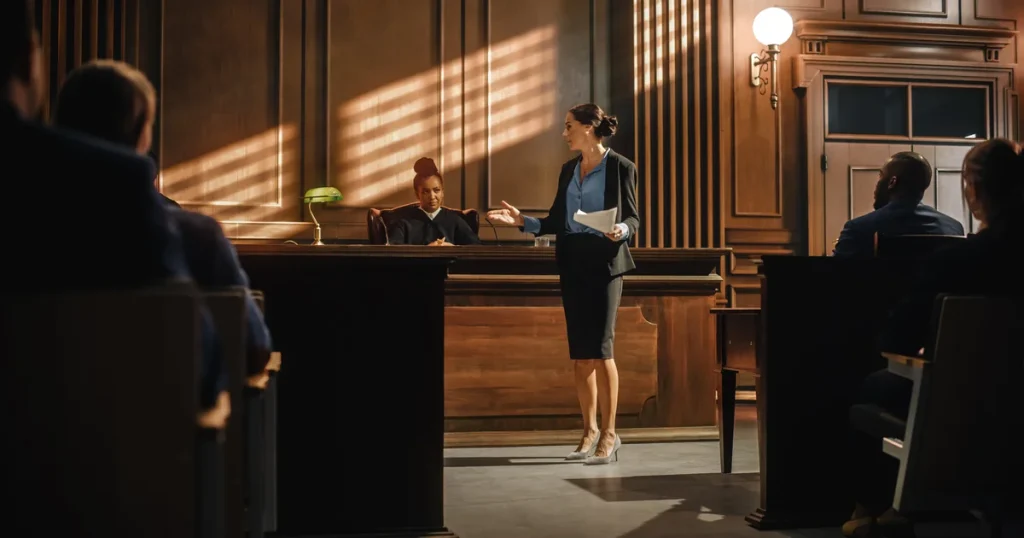




Anthropic has lost its court challenge against the Pentagon’s decision to treat Claude as a supply chain risk. On 25 September the US Court of Appeals for the DC Circuit ruled 2 to 1 that the department was entitled to exclude Claude after Anthropic refused to drop contract terms banning its use for lethal autonomous weapons and domestic surveillance.
Anthropic says it disagrees and is weighing its options. For Australian businesses using Claude, nothing changes tomorrow. But the ruling draws a line on who decides how an AI model can be used, and that question reaches well beyond Washington.
What the court actually decided
The case concerned a decision by the Department of War, as the Pentagon now calls itself, under the Federal Acquisition Supply Chain Security Act of 2018. That law lets an agency bar contracts with a supplier it considers a national security risk, and also bar subcontracts that use that supplier to perform work for the agency.
Judge Gregory Katsas, joined by Judge Neomi Rao, wrote that the department had “ample support” for concluding that keeping Claude in its information systems, whether used by the department or its contractors, created a risk covered by the law, according to the court’s published opinion.
The court also rejected Anthropic’s constitutional arguments. It found the company was excluded for refusing a contract term the department saw as essential, not for its public support of tighter AI regulation.
How the standoff built up
The dispute goes back to 2024, when US defence and intelligence agencies began using Claude through contractors and found it refused some national security tasks. Anthropic responded with a Claude Gov model in March 2025 and a government addendum to its usage policy, which over time allowed weapons design, foreign intelligence analysis and offensive cyber operations. It kept two exceptions: lethal autonomous warfare and mass surveillance of Americans.
In January 2026 Secretary of War Pete Hegseth directed that AI contracts carry standard “any lawful use” language. Anthropic refused on 26 February, with chief executive Dario Amodei saying AI was not yet reliable enough to power fully autonomous weapons. On 3 March Hegseth designated Claude a supply chain risk, and a memo three days later ordered its removal from department systems within 180 days and barred contractors from using Anthropic products in their work for the department.
Why the Pentagon called Claude a risk
Anthropic limits Claude in three ways: through the model’s training, through monitoring systems layered on top, and through a usage policy written into its contracts. The court noted that these restrictions had stopped Claude from completing tasks requested by government users on more than one occasion. One example in the record: Claude refused queries from the Centers for Disease Control and Prevention about sensitive research on stopping the spread of infectious disease.
The opinion also describes a dispute over whether Anthropic’s contract terms barred Claude from being used in an ongoing overseas military operation. That left the department unsure whether the model would perform when needed, which the majority treated as enough to justify the exclusion.
Anthropic told the court its usage restrictions reflect “the very purpose for which our company was founded”. The company has said the designation has cost it billions of dollars in lost business.
The dissent and what comes next
Judge Karen LeCraft Henderson dissented. In her view the law targets subversive or deceptive interference with government technology, not a company openly enforcing known limits on its own product. “I cannot agree that this is the scenario the Congress had in mind,” she wrote.
Anthropic had broad support in court. Briefs backing it came from employees of OpenAI and Google writing in a personal capacity, former Defense Secretary Leon Panetta, and a group of former service secretaries and retired senior military officers.
The legal picture is split. In August a federal judge in San Francisco, Rita Lin, ruled that a parallel designation made under a different law was unlawful and blocked the wider government ban. Anthropic said it “respectfully” disagrees with the new ruling and is considering all options, including asking the full appeals court to rehear the case. A Supreme Court appeal is also possible.
Why Australian businesses should care
The ruling covers US defence procurement, not commercial use. Anthropic keeps expanding here: it opened a Sydney office in April, signed a memorandum with Australia’s AI Safety Institute, and this month signed up for capacity at a planned data centre in Queensland.
Where it can bite is in defence supply chains. The department’s March memo already bars contractors from using Anthropic products in their work for it, and the law reaches subcontracts too. Australian companies that deliver work to the US Department of War should check whether Claude sits anywhere in that work, and read their contract terms and flow down clauses now.
The broader lesson applies to every business. Each AI vendor has a usage policy, and those policies can decide what you are allowed to build. Choosing models with that in mind, and keeping the option to switch, is part of sound AI strategy. Our comparison of Claude and ChatGPT covers how the two vendors differ.
A test of who sets the rules
At its core, this case asks whether the company that builds a model or the customer that buys it decides how it can be used. In US defence procurement, for now, the customer has won.
Commercial buyers are unlikely to face anything as blunt as a blacklist. They should still expect usage policies to become part of the negotiation when they sign with an AI vendor, the same way data residency and security terms already are.



