
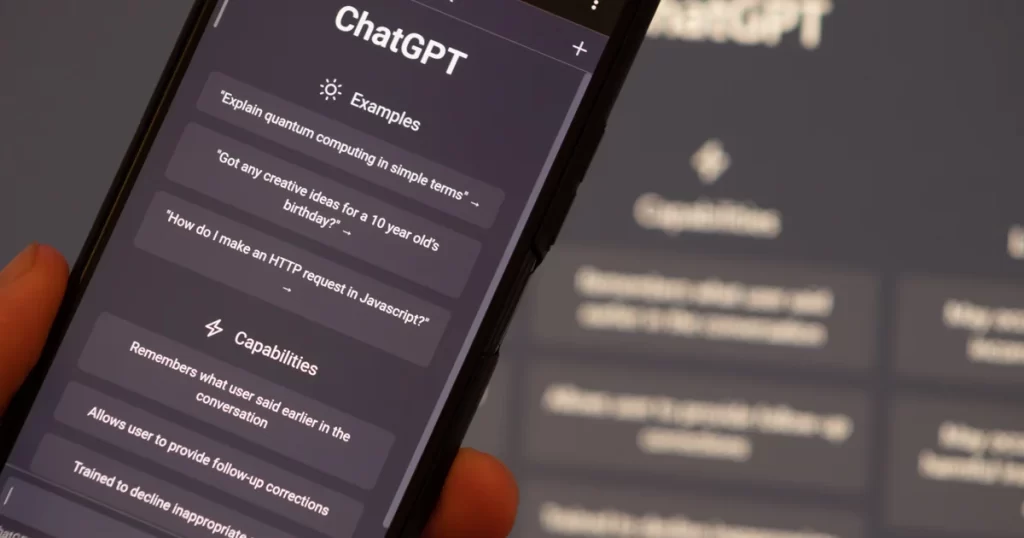




A new technical analysis has documented exactly how OpenAI’s advertising system inside ChatGPT works — and the answer is more sophisticated than the search engine ads it appears to be replacing. Carousel cards delivered as advertiser ad units appear within the conversation stream, with full click attribution flowing through OpenAI’s new OAIQ SDK and four layers of encrypted tokens.
The shift matters for Australian businesses on both sides of the system. Advertisers — including Canva, an Australian company already among the documented participants — are getting access to a new attention surface that bypasses traditional search engines. Publishers and businesses optimising for AI search traffic are watching a familiar pattern: the platform that hosts your audience’s queries is also selling them ads.
What the ads look like inside a conversation
The buchodi analysis observed six different ads across six different conversations, all delivered as carousel cards with title, body, image, and a clickable target URL. Trigger logic appears to be contextual: a query about planning a trip to Beijing surfaced Grubhub; one about NBA playoffs surfaced Gametime.
The author found no evidence that prior conversation history is currently used for targeting, though that may change as the system matures. Ad units are inserted into the same Server-Sent Events stream as the model response, which means rendering is functionally indistinguishable from a tool-use card or follow-up suggestion until the user clicks.
How OpenAI tracks clicks and conversions
Attribution rests on four encrypted Fernet tokens. The most important is oppref, stored in a 720-hour cookie that travels with every pixel event, paired with olref, ad_data_token, and the server-side ads_spam_integrity_payload for fraud checks. The OAIQ SDK (version 0.1.3) handles merchant integration, posting measurement events to bzr.openai.com.
Importantly, OpenAI keeps post-click visibility through its in-app webview — observing where users go after clicking the ad, in a way traditional ad networks do not. That gives the platform a feedback loop on which queries convert to which advertisers, sharper than anything available on the open web.
Documented advertisers include Canva
The author observed ads from Grubhub, GetYourGuide, Axel, Gametime, Aritzia, and Canva. Canva’s inclusion stands out — it is an Australian company, an Anthropic platform partner, and now an OpenAI advertising customer, all at the same time.
Whether other Australian brands have direct access is not yet public; OpenAI has not announced rollout percentages or geographic distribution. The fact that the rollout is observable from individual user accounts, however, suggests it is well past the closed-beta stage.
What this means for Australian advertisers and publishers
For brands buying media in Australia, ChatGPT’s ad inventory adds a new placement type — embedded conversational answers — that maps imperfectly to existing search and display campaigns. Reach is unclear, but if rollout patterns mirror OpenAI’s previous product launches, Australian users will see these ads soon if they have not already.
Publishers and SEO teams have a separate concern: visibility in AI answer engines is now competing for attention with paid advertiser slots in the same response. For organisations rethinking their search visibility — see our overview of AI marketing tools used by Australian businesses — the line between organic and paid placement is blurring fast.
Tracking how this affects AI search outcomes will be one of the operational questions for marketing teams in 2026. The metrics that matter shift from “did we rank?” to “did the assistant cite us, and did it do so beside or below a paid card?”.
A new ad channel that bypasses search
ChatGPT’s advertising layer signals a structural change in digital advertising: the conversational layer is now monetised. For Australian advertisers, the question is when to test rather than whether.
For publishers and businesses tracking visibility in AI answers, the implication is that organic reach now competes with paid placement inside the same response. The ad attribution stack documented this week makes that competition measurable for the first time.



