
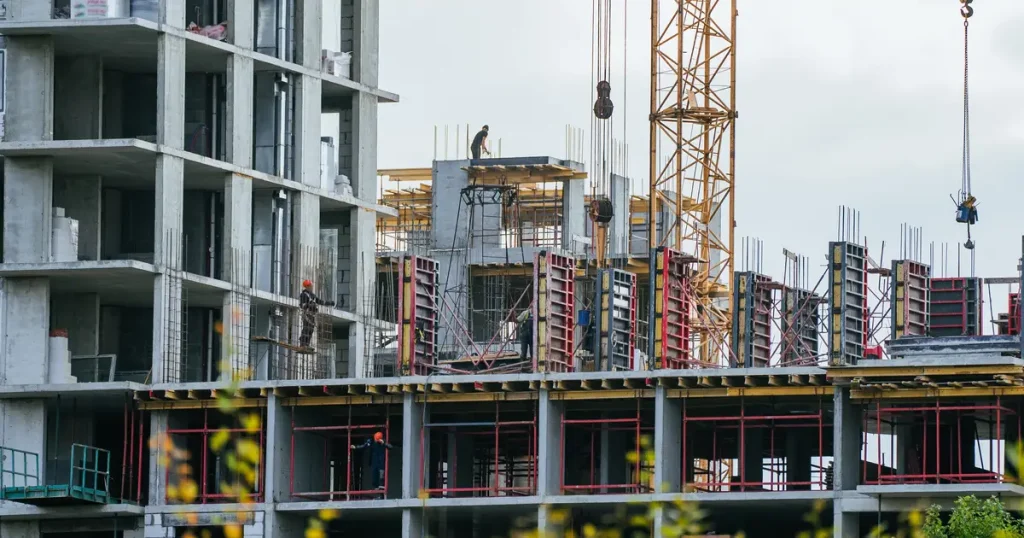




Residents in Sydney’s north have stopped a data centre planned about 20 metres from their homes. Goodman Group has withdrawn its 90 megawatt Project Mars at 12 Mars Road in Lane Cove West after the application drew 374 public submissions, a record for a NSW data centre. The NSW Planning Portal now lists it as withdrawn. Media reports had valued it at about $1.2 billion.
In a letter to the NSW Department of Planning, Housing and Infrastructure dated 28 September, Goodman’s head of planning, Guy Smith, said the policy and regulatory environment for large data centres had evolved significantly since the process began in March 2025. Having considered emerging federal and state policy, Goodman concluded it would not progress the application.
Why locals fought the project
Being that close to houses was the core complaint, and objectors pointed to noise, air quality, water use and the loss of trees beside Blackman Park. Submissions on the planning portal cite 49 diesel generators and more than a million litres of diesel storage. Local reporting counted only nine submissions in support.
The pressure was political as well as local. Federal senators questioned Goodman at the parliamentary inquiry into AI and data centres, and a packed community meeting at the Blackman Park Scout Hall followed on 11 September. Less than three weeks later, the application was gone.
Rules are tightening across Australia
Goodman’s letter points to policy, and the direction is clear. The federal government’s first consultation paper on AI infrastructure, issued by the Department of the Prime Minister and Cabinet, raises a mandatory minimum distance from homes and schools ahead of national rules planned for 2027. States will keep control of local planning and can set stricter standards.
Victoria has already gone further, with a 150 metre buffer from homes and no new data centres near schools or childcare centres, as we covered in our report on Victoria’s new rules. Developers now have to plan for community and distance tests as well as power and land.
The grid is filtering projects too
Planning is not the only filter. The market operator’s 2026 data centre forecasting overview counts 225 projects in development across the National Electricity Market, with 67 gigawatts of combined capacity, and says 36% of the projects in development in its 2025 report were cancelled.
Around 165 existing data centres used about 5 terawatt hours in the 2026 financial year, roughly 3% of NEM consumption. AEMO still expects that to grow nearly seven times, to around 34 terawatt hours or 13% of consumption by the 2036 financial year under its central scenario. The question is no longer whether Australia builds them, but where and on what terms.
Why Australian businesses should care
For most businesses the effect is indirect but real. Local cloud and AI capacity is what keeps sensitive workloads onshore, and if approvals near the big cities slow down, new capacity is more likely to land further out. Teams with data residency obligations should know where their providers actually run, which our guide to AI data residency in Australia covers.
It also changes the conversation inside companies. Choosing where AI workloads run, onshore, offshore or on the device, belongs in an AI strategy rather than being left to whatever default region a provider picks.
The next fights over data centres
Lane Cove West is not finished with the issue: AirTrunk’s separate 140 megawatt proposal on Mars Road remains active, according to local reporting. The Senate inquiry continues, with its final report expected on 16 November, and its findings will help decide how close to homes the next wave of data centres can be built.



