
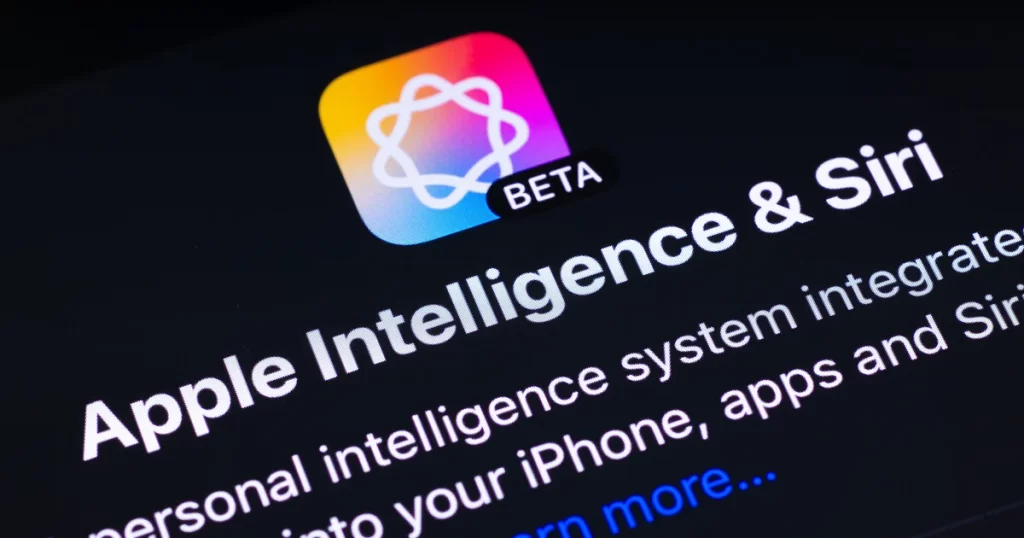




Apple is reportedly building a new Siri app that puts privacy front and centre, according to TechCrunch reporting based on Bloomberg’s Mark Gurman. The biggest change is a standalone chat app, similar to ChatGPT, with options to wipe conversations on a schedule.
For Australian businesses running AI assistants in customer service or internal tools, the news matters less for what Apple ships and more for what it signals. How long a chatbot keeps your data is moving from a buried privacy clause to a visible product setting.
What Apple is reportedly building
The reports describe Apple’s first standalone Siri app. Instead of the voice first model that has defined Siri since 2011, the app would let people type and speak in a chat layout, much like ChatGPT, Claude or Gemini.
The app is expected to land with iOS 27 at WWDC in June, as reported by The Verge. Apple has not said anything publicly. Gurman, whose Apple reporting at Bloomberg tends to be accurate on product roadmaps, framed the rebuild as Apple’s reply to Siri’s reputation for falling behind newer assistants.
Privacy as the selling point
The standout feature is a set of retention controls. Users would be able to wipe chats after 30 days, after one year, or keep them forever. ChatGPT and Claude have history controls today, but neither sets a delete schedule by default in the app. Most leave that choice to enterprise admins or to the API.
Apple is leaning on privacy as both a brand promise and a way to hedge Siri’s weaker reputation on raw capability. The reports do not say if the retention rules extend to the data drawn from chats, like the embeddings, summaries and signals used to tailor responses.
Why Australian businesses should pay attention
For Australian firms running chatbots, voice agents or internal AI assistants, the news cuts two ways.
First, retention is now a visible product setting. When consumers can pick 30 days or one year on a phone app, they start asking the same of work platforms. Firms under the Privacy Act 1988 or APP 11 already have to limit how long they hold personal data, but vendors’ defaults have often been hidden in the fine print. Procurement and risk teams will press harder on this, especially in finance and health.
Second, the way vendors of conversational AI compete is shifting from raw capability to how they handle data over time. That favours providers and integrators who can explain plainly how data moves, where it sits, and when it gets cleared.

A turning point for assistant privacy
If Apple ships what the reports describe, retention controls will quickly become standard across consumer AI apps. Anthropic, OpenAI and Google will feel pressure to match, and the enterprise products built on those APIs will inherit the same conversation.
For Australian businesses still trialling or scaling AI assistants, this is the moment to check retention defaults and contract terms before staff and customers start asking. The firms that treat assistant choice as a governance decision, not only a feature comparison, will be in a stronger spot when privacy becomes the lead question for buyers.



