




Anthropic has opened its watermark detection tool to outside organisations. Regulators, law enforcement, media, fact checkers, independent researchers, educational bodies and European civil society groups can now ask whether a piece of text carries Claude’s invisible mark. Access runs as a private preview through a registration form rather than a public key.
The detail that changes the picture is which models actually carry the mark. Anthropic’s own documentation says the currently supported models are Claude Fable 5.1 and Claude Mythos 5.1, both of which launched this week. Everything else in the range is still unmarked, including the models most teams run every day.
Who gets access to the detector
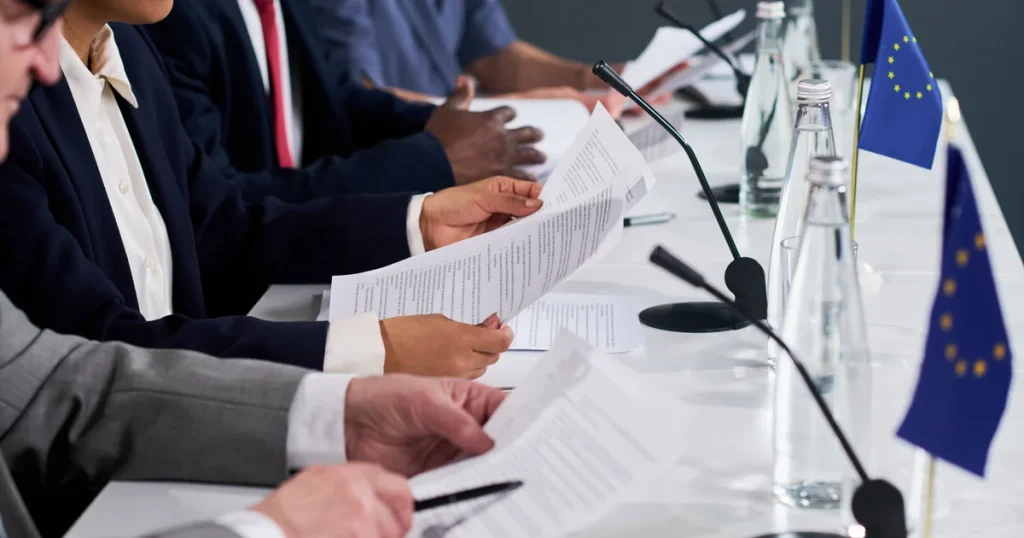
The detection API is in private preview. Anthropic lists the eligible groups as regulators, law enforcement, media, fact checkers, independent researchers, educational organisations and EU civil society groups, alongside enterprises that carry their own obligation to verify marking. Organisations register interest through a form, and Anthropic says it plans to widen access over time.
That framing matters. This is not a plagiarism checker a manager can point at a contractor’s report. It is a compliance instrument handed to bodies that already have a legal reason to ask, and for now the queue runs through Anthropic.
The enterprise route is narrower than it first sounds. It is aimed at companies that must verify marking to meet their own duties under the Act, not at any business that would simply like to test a supplier.
Only two models carry the mark
Anthropic’s support documentation is blunt about coverage. The models currently supported are Fable 5.1 and Mythos 5.1, both of which landed this week. Marking applies to models released after 2 August 2026, which leaves Claude Opus 5, Sonnet 5 and Haiku 4.5 outside it. Those are the three that most teams actually run.
Anthropic says it is working to add marking to models released before that date and will update its documentation as that arrives. No timeline has been given. Until it lands, a detector pointed at typical Claude output is searching for something that was never put there.
That gap is easy to miss, because the announcement reads as though the whole product line is covered. It is not, and the difference decides whether a check means anything at all.
There is no way for a business to check its own output either. Detection is not a setting inside the Claude apps or the API, so a company that wants to know whether its own material is marked has to join the same queue as everyone else.
What a positive result proves
The mark is a statistical pattern rather than a signature. Anthropic uses a key and the preceding words to settle which word the model picks, at points where several options are equally good. Reading that pattern back gives a likelihood that the text was partly written by Claude. The approach follows work Google published earlier on the same problem.
It cannot tell you a human wrote something, and it cannot identify a different AI system. It weakens on short passages, because there are fewer choices to read. It also thins out on tightly factual writing, where accuracy leaves the model very little freedom to encode anything at all.
Editing behaves the way you would expect. Light changes may leave the pattern intact, while a rewrite that replaces every word removes it. Anthropic also says the mark carries nothing about the individual user, and that it does not affect output quality or cost.
We made the same point in August when the commitment was first announced: a mark tells you Claude was involved in processing, not that Claude was the author. That distinction survives the detector going live, and it is the part most likely to be misread.
What this does to AI clauses
Plenty of Australian agreements now limit or prohibit AI use in deliverables, and until this week those clauses were effectively unenforceable. A detector changes that in principle, and it matters most where the paperwork itself is the product, as it is in document heavy workflows.
In practice the change is smaller than it looks, and it cuts the wrong way. A clean result proves nothing, because the model behind the work almost certainly carries no mark. A positive result only shows Claude touched the text, which is compatible with a human writing it and running it through a model to tidy the grammar.
Why Australian businesses should pay attention
Australia has no equivalent marking rule. The obligation comes from the European Union AI Act, and Anthropic signed its Code of Practice on Transparency of AI Generated Content in July 2026 alongside roughly 190 other signatories. Anthropic chose to apply marking wherever Claude is sold rather than only in Europe.
That decision is what pulls Australian output into scope. It arrives through the vendor rather than through local law, which is the pattern worth watching, because it means European rules reach Australian desks without an Australian parliament touching them.
For teams already mapping obligations, this belongs in the same file as the rest of the transparency regime rather than as a separate problem, and our EU AI Act checklist covers where those duties reach Australian suppliers.
What changes over the coming months
Two things would make this consequential. The first is Anthropic extending marking backwards to Opus 5, Sonnet 5 and Haiku 4.5, which would move coverage from a corner of the range to most of it. The second is access widening beyond the current list of eligible bodies.
Until both happen, the detector is a real capability aimed at a very small target. It is worth knowing that it exists, and worth knowing what a result would and would not mean before someone waves one in your direction.



