




Anyone who has used Claude Fable 5 for anything touching biology has met the same wall. You ask a question, the answer arrives, and it is noticeably worse than what Fable 5 normally produces. That is because the request never reached Fable 5 at all. Anthropic announced on 7 August that this now happens far less.
The company retrained the classifier that guards biology requests and says the change cuts biology-related fallbacks by roughly 85% across its products. The interesting part is not that number. It is how unevenly the benefit is spread.
What a fallback actually is
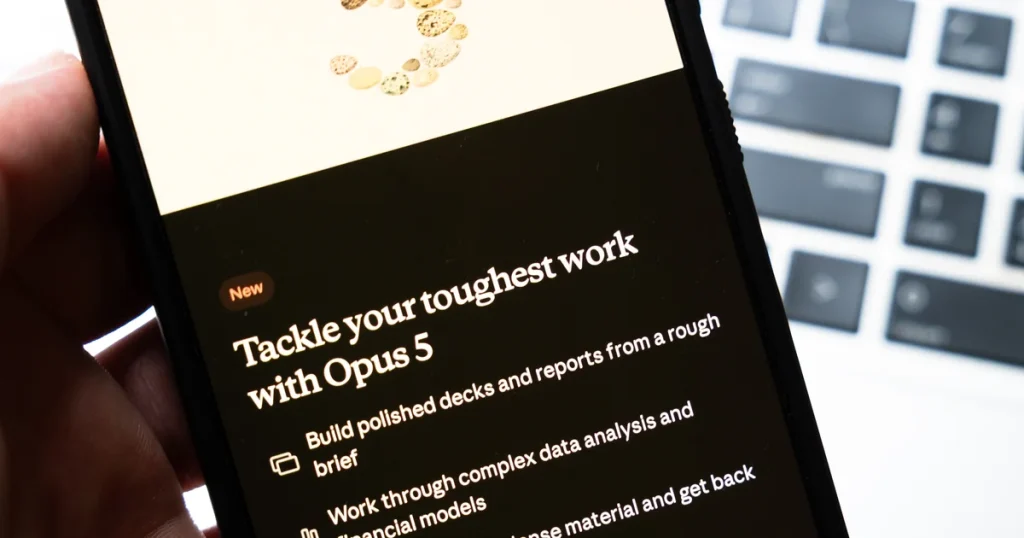
Anthropic runs small automated classifiers alongside its main models. When one decides a request touches a safeguarded biology topic, it does not refuse. It quietly re-routes the request to Opus 5, a capable model that does not carry the same biological capability and therefore cannot help a malicious user as much.
Opus 5 is no consolation prize in general terms. On the current Artificial Analysis leaderboard it actually outscores Fable 5, and we compared Opus 5 and Fable 5 on cost and speed last week. But it is deliberately weaker in this one domain, which is the entire point of routing to it.
The user is rarely told any of this. They simply get a weaker answer than the model they are paying for would have given, which is why the behaviour has been a persistent complaint since launch rather than a visible error.
Why it was set so wide to begin with
Anthropic is unusually direct about the trade-off it made. Fable 5 launched with almost all biology queries blocked, deliberately, because the alternative was holding the model back entirely for weeks or months while the safeguards were refined.
The company says its own assessments found Fable 5 could offer significant uplift to someone building a biological weapon, meaning capabilities they could not obtain elsewhere. It cites the US Intelligence Community’s 2026 Annual Threat Assessment, which warns that advances in synthetic biology and genomic editing could lead to novel biological threats, and that several state actors likely run offensive biological and chemical weapons programs.
The line is genuinely hard to draw
The post makes a case that is easy to miss in coverage of AI safety. Beneficial and harmful biology often require the same knowledge. Live vaccines are made by growing the pathogen you are trying to prevent. The blood pressure drug captopril came from isolating the toxic component of snake venom that crashes blood pressure in humans.
That ambiguity is exactly what a sophisticated bad actor exploits, dressing a dangerous request as ordinary research. Anthropic rewrote the classifier’s constitution, the rule set that decides what counts as in scope, took feedback from internal and external experts, rebuilt the training data and retrained.
The number that matters depends on where you work
The headline 85% covers biology requests specifically. Buried in a footnote is the figure that decides whether this affects your business at all: the drop in total fallbacks, from any cause.
On Claude.ai it falls by roughly 67%. On Cowork, 55%. On Claude Code, 17%. On the Claude Platform, the API most products are actually built on, 7%.
So a team using the chat interface for research or drafting will notice this immediately. A team that has built a product on the API will barely register it. Same announcement, an order of magnitude apart in effect. It is the same lesson as the effort setting that moves the bill: the configuration decides the outcome, not the model name.
What is still blocked
Anthropic is clear that the dual-use core has not moved. Virology, toxicology and molecular design still fall back to Opus 5, and the company states plainly that Fable 5 is not yet usable for professional biology research or drug development.
What opens up is the everyday layer: interpreting lab results, understanding symptoms, learning biology in an educational context, and more support for healthcare professionals on clinical tasks. Anthropic also warns that false positives will remain, because the classifier keeps a deliberate safety margin that blocks some very low-risk requests out of caution.
Why Australian businesses should pay attention
The practical lesson is not about biology. It is that a model’s advertised capability and the capability you receive are two different things, and the gap is invisible from the outside. A silent downgrade produces a worse answer with no error message, which is a difficult failure to catch in testing and an easy one to blame on the model being overrated.
For Australian clinics and allied health operators, the widened scope is a real change to what tools can help with, though it sits alongside Privacy Act obligations that do not move because a classifier did. Anyone evaluating clinical tooling should read this as a shift in the ceiling, not in the compliance work, and the same caution applies when choosing an AI medical scribe.
For anyone building on the API, the honest reading is that almost nothing changed this week, whatever the headline says.
A safeguard that is finally being tuned
The direction of travel is sensible. Launch wide, measure the false positives, then narrow the net rather than leaving a blunt filter in place because it is safer for the vendor.
It also sets a precedent worth watching. Anthropic has published similar classifier work in cybersecurity, and the same trade-off between over-blocking and access exists there. If the biology retrain holds up without a rise in genuine misuse, the argument for loosening other domains gets easier to make.
For now the useful takeaway for buyers is narrower than the announcement suggests. Check which surface your workload runs on before assuming the improvement applies to you, and if the answer is the API, plan as though nothing has changed.



