





Microsoft has rebuilt Copilot around three new pieces, and the one that will get the most attention is an agent that does not stop when you log off. Autopilot, tested until now under the name Scout, is a cloud agent that watches Teams channels, chases up threads and picks a project back up days later without waiting for a prompt.
The announcement, published by Microsoft on 25 September, also puts Word, Excel and PowerPoint inside the Copilot app and adds a tool that builds small business apps from a plain English request. For Australian organisations already on Microsoft 365, the question is less whether to try it and more how to supervise an assistant that acts on its own.
What the new Copilot actually adds
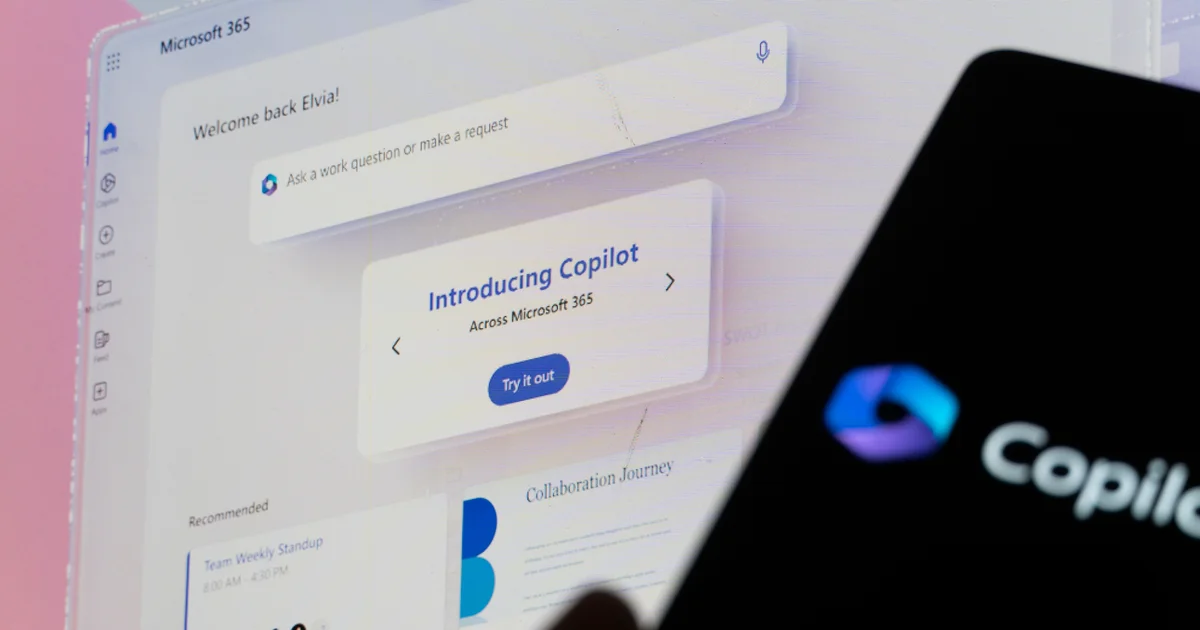
Home is the new starting screen. It combines Chat, for quick questions and first drafts, with Cowork, where you hand over a longer job such as a tender response or a month end close package and get a finished result back. With Office in Copilot, those results are real Word documents, Excel workbooks and PowerPoint decks that colleagues can edit at the same time.
Code is aimed at staff who are not developers. You describe a tracker, a dashboard or a small internal app, and Copilot builds it. Microsoft says it runs on the same technology as GitHub Copilot, inside a sandbox that can be hosted within the company’s own Microsoft 365 tenant, with a new Copilot Managed Runtime keeping those apps under IT control.
How Autopilot works on its own
Autopilot gets a name, a role and a goal from its owner, then runs in the cloud with its own identity, memory and workspace. Microsoft’s example is a supplier review: the agent builds the schedule, prepares the meetings, handles the follow ups and contacts stakeholders for updates. Staff can mention it in Teams or Outlook like a colleague, and its actions sit behind permissions and audit logs.
That is a real step beyond assistants that wait for a prompt. It is also the kind of unattended agent that has caused trouble elsewhere this month, as OpenAI’s recent agent failures showed. Microsoft’s answer is governance: the owner sets objectives and boundaries, and IT decides what the agent can reach.
When it arrives and how it is billed
None of this is generally available yet. Home and Code start rolling out through Microsoft’s Frontier early access program in the coming weeks, and Autopilot moves to private preview at the end of September. A command centre called Today, which drafts replies and proposes calendar changes before you ask, enters private preview in October.
Billing splits in two. Everyday Copilot in Chat, Word, Excel, PowerPoint, Outlook and Teams stays on a per user licence with a fixed cost. Cowork, Code, Autopilot and frontier models such as OpenAI’s Astra and Anthropic’s Fable run on usage based billing, so the bill grows with the work the agents do. Our comparison of GPT 6 Astra and Claude Opus 5.5 covers where those premium models earn their cost.
Why Australian businesses should care
For businesses that already run on Microsoft 365, these tools will arrive inside software staff use every day rather than as a separate product. That lowers the barrier to trying them, and it moves the hard work to setup: which tasks an agent may run unattended, which mailboxes and files it can see, and who approves its spending.
An agent that reads email and contacts suppliers also handles personal information. Under the Privacy Act 1988 the organisation remains accountable for what happens to that data, and the OAIC has already urged caution about putting personal information into commercial AI products. A short AI strategy review before switching Autopilot on costs far less than cleaning up afterwards.
Usage based billing also needs an owner. Microsoft is adding controls that let admins set spending policies, choose which model families each group can use and show staff their remaining credits inside Copilot. Finance teams should set those limits per team before the first long running job, not after the first invoice. Until Autopilot ships, the agents Australian businesses can buy today are the benchmark for what it should cost.
From assistant to digital coworker
Microsoft plans to show more at Ignite in San Francisco from 17 to 20 November. Until then, the practical move is to pick one recurring process, such as a weekly supplier update or a month end pack, and test it in Frontier with tight permissions. Teams that learn to brief and supervise an agent now will be better placed when these features reach general availability.



