Profound
Tracks up to 9 AI engines in one platform, the deepest enterprise coverage here.
Enterprises 200+ staff with a dedicated AI search analyst.
Explore Profound →Peec AI
Turns raw AI search data into a ranked weekly action list.
Mid market teams that want to know what to fix first.
Explore Peec AI →Otterly.ai
Cleanest interface for tracking brand mentions across AI engines.
Brand led teams with content strategy already in place.
Explore Otterly.ai →Goodie AI
Monitoring plus an agentic content engine in one platform.
Mid market wanting monitoring plus content optimisation.
Explore Goodie AI →Geoptie
All in one GEO tool: any 4 of 7 AI engines at a fraction of enterprise prices.
Australian small businesses (10-50 staff) starting from zero.
Explore Geoptie →Gauge
Deepest competitor gap analysis on the list. YC backed, technical.
Data driven teams with a strategist who can form hypotheses.
Explore Gauge →HubSpot Grader
Free one off AI Search Grader check. The audit you run before paying anything.
Anyone testing the waters before paying for ongoing tracking.
Explore HubSpot Grader →AthenaHQ
Multi LLM platform with a free plan and 11 engines on Starter.
Self guided SMBs up to enterprises.
Explore AthenaHQ →AIclicks
Choose 3 to 6 of 11 AI platforms per plan, from a ChatGPT first start.
Teams that want several engines on a small budget.
Explore AIclicks →Rankscale
Tracks third party citation sources and brand sentiment over time.
Brand reputation tracking as part of the marketing brief.
Explore Rankscale →When I look at how Australian businesses are losing visibility right now, the pattern repeats across every client we onboard at Aivy. People stopped typing keywords into Google a long time ago. They ask ChatGPT about accounting software, they ask Perplexity for the best AI tools, they let Google's AI Overview answer before they ever see the blue links. If your brand is not in those answers, you are invisible to a buyer who has already decided what they want.
I have spent the past six months running this audit for Australian businesses in legal, accounting, real estate and removalist verticals, and the numbers are blunt. This very guide drew 4,093 Google impressions in September 2026 and two clicks, which is what a page looks like when the answer is given before the links. Australia has near zero local listicles ranking for best generative engine optimisation tools, which means the field is open for any business willing to measure and act now.
In this article I walk through the 10 GEO tools I would actually consider for Australian businesses today, with each vendor's own plans and billing currency, notes on how each tool fits the local stack, and an honest who should not use it line for each. Before you pay for anything, though, the strongest move is often a 30 minute DIY audit using free queries. I will show you how to do that too.
Why GEO tools matter for Australian businesses in 2026

The shift from search engine optimisation to generative engine optimisation is not a 2027 problem. OpenAI says ChatGPT has passed a billion weekly users, Perplexity sits inside the daily research loop of most knowledge workers I know in Melbourne, and Google says AI Overviews reach more than 2.5 billion people a month, with AI Mode, live in Australia since October 2025, past a billion. The buyer journey now starts and often ends inside an AI answer. SEO is not dead, but it is no longer enough on its own.
The boundary between these generative AI engines and the newer agentic AI systems is starting to matter for Australian businesses too, and our agentic AI vs generative AI guide covers it in detail if you want the full picture. The timing is unusually favourable for Australian businesses right now. The SERP for best generative engine optimisation tools is dominated by US vendor blogs, with no Australian agency or publication holding a real position.
That gap will close inside 12 months once the Australian market wakes up, but right now you can still rank a well written piece without a heavy backlink profile. The same holds for tracking your own brand visibility inside ChatGPT or Perplexity. Most Australian businesses I speak to have never measured it once.
A GEO tool worth paying for has to do five things well, and I score every product on this list against the same checklist:
- Engine coverage. The tool tracks ChatGPT, Perplexity and Google AI Overviews at minimum. Anything narrower is a partial picture.
- Citation source mapping. The tool shows you which third party sites the AI engine pulls from when it answers, so you know which sites to target.
- Action prioritisation. The tool turns raw data into a ranked to do list. A dashboard without what to fix first is just decoration.
- Pricing fit for Australian small businesses. Entry tier under $300 a month, ideally under $100. Anything above that is enterprise only.
- Data residency disclosure. The tool tells you where your prompts and tracked queries are stored. Relevant under Privacy Act 1988 and the OAIC's guidance on AI use.
The fifth point is the one almost no other listicle mentions. If your tool routes prompts through US hosted infrastructure with no Australian data residency option, that becomes a Privacy Act question for any business handling personal information.
GEO, answer engine optimisation and LLM SEO: three names, one job
Three labels circulate for the same work, and the tools above use them interchangeably. Generative engine optimisation is the academic one: a November 2023 paper by Aggarwal and colleagues introduced the term along with GEO-bench, a benchmark for measuring whether a page gets cited inside an AI answer. Answer engine optimisation came out of the SEO industry. LLM SEO is the informal version people type into a search box.
For an Australian business the distinction does not change the work. All three describe the same goal: being the source an AI engine quotes when someone asks a buying question. The tools in this guide track exactly that, under whichever label their marketing prefers.
Google is blunter about it than most vendors. Its own guidance for site owners states there are no additional requirements to appear in AI Overviews or AI Mode, and no special optimisations necessary, because the same SEO fundamentals apply. It also notes AI Overviews only show when its systems judge them additive to classic Search, so they often do not trigger at all.
That matters for your budget. If a vendor pitches a proprietary ranking factor for AI answers, ask them to square it with what Google publishes. What genuinely changes is measurement. Search Console now shows AI Overviews and AI Mode impressions, but no clicks or queries, and Bing reports Copilot citations; closing the rest of that blind spot is the real job these tools do. It is the same gap we work through with clients in professional services before anyone pays for a dashboard.
Profound: best for enterprises tracking AI engines

Profound is the most comprehensive AI visibility platform I have tested. It tracks brand mentions and citations across up to nine engines, including ChatGPT, Perplexity, Google AI Overviews and AI Mode, Microsoft Copilot, Gemini and Claude, combining what users ask, what AI engines answer and where the citations come from. For an enterprise marketing team trying to manage AI visibility across global markets, the breadth of coverage is genuinely useful.
The trade off is the price. After a seven day trial on three engines, Profound is enterprise priced and custom quoted, and it now pitches itself as an AI marketer with agents on top of the data. The dashboard is dense, the value only shows up at the volume of queries an enterprise actually runs, and the analyst time required is not optional.
I have seen Profound deployed well at an ASX listed retailer with a dedicated AI search analyst on the team, and seen it sit unused at a 30 person agency that bought it because a vendor pitched hard. If you cannot name the analyst who will own the dashboard before signing, you are not ready for Profound yet.
AI engines tracked, by tool
Engines covered on the plan shown: Profound at Enterprise, the others on their entry paid plan, where some let you choose a set from a longer list. Axis 0 to 10. Source: vendor pricing pages, read 1 October 2026.
In Australia: Profound is a US company and publishes no Australian data residency option or Australian pricing. Procurement will route through US contracts, which means longer legal cycles for any business with internal compliance review.
Peec AI: best for prioritised AI search actions

Peec AI's pitch is simple and the product mostly delivers on it. Most GEO tools dump data on you, with brand mention counts, citation tallies, share of voice charts. Peec AI takes that same data and outputs a ranked list of actions, with clear next steps tied to specific content gaps or competitor wins. For a marketing team without a dedicated AI search analyst, that what to do next framing is the difference between a tool that gets used and a tool that gets ignored after week three.
Where Peec AI earns its keep is the citation source gaps. A typical week of output for an Australian client looks like a ranked list of 6 to 12 actions: rewrite this service page, target a guest post on this specific industry publication that ChatGPT cites three times in your category, get a mention in this specific Reddit thread your competitor already owns, fix this FAQ that AI Overview is pulling from a competitor instead of you.
The platform tells you whether each source is reachable for your brand and roughly what the lift would be. Most Australian agencies and in-house teams cannot generate that level of insight themselves without burning hours every week.
In Australia: Starter costs $133.37 a month, Pro $343.96 and Advanced $694.93, or $112.31, $287.80 and $589.64 billed annually; Peec shows euros only to European visitors. Each plan lets you choose three engines from ChatGPT, AI Mode, AI Overviews, Copilot, Gemini and Naver; Perplexity sits in the Enterprise list. No published Australian data residency.
Otterly.ai: best for AI brand mention monitoring

Otterly.ai is built around one job, monitoring how often and where your brand surfaces inside ChatGPT, Perplexity, Google's AI Overview and Microsoft Copilot. The interface is the cleanest of any tool on this list, and the alerts work the way I want them to, telling me when my brand starts losing share of voice on a tracked query rather than after the fact. For a brand led marketing team that already has SEO covered and just wants the AI visibility layer added, Otterly.ai is hard to beat.
Where it falls short is action guidance. The data is excellent, but the platform leaves it to you to decide what to optimise next. That works fine if you have a content strategist on the team who can translate "brand X is getting cited 40% less often this month" into a content brief. It is a problem if you wanted the tool to write that brief for you.
In Australia: Lite costs $40.71 a month, or $35.10 billed annually, Standard $265.34 and Premium $686.51, with Claude, Gemini and AI Mode as paid add ons. EU based hosting which sits closer to Australian privacy expectations than tools that only host in the US, though there is still no Australian data residency option.
Goodie AI: best full stack monitoring and content optimisation

Goodie AI tries to do what Otterly.ai does on the monitoring side and what Peec AI does on the action side, all inside one platform, plus an agentic content engine that drafts optimisation suggestions automatically. Across two Australian client accounts I tested it on, the breadth is useful, especially the way it walks you from brand mention data to a concrete content edit suggestion in a few clicks.
The trade off with full stack tools is depth. Goodie AI is good at most things and excellent at a few. The agentic content suggestions are useful as drafts but I would not publish them without a human editor reviewing every line. For Australian businesses where the marketing lead is also the content writer, that human review step is not optional. Goodie AI saves time but does not replace editorial judgement.
In Australia: Core costs $560.16 a month on annual billing, or $672.19 month to month, and Pro $1,402.50. The Core plan tracks ChatGPT, AI Overviews, Perplexity, AI Mode and Copilot, while Claude is Enterprise only. The agentic content engine is the standout feature but generates US English by default, which means an extra editing pass if you write in Australian English.
Geoptie: best value all in one GEO tool for SMBs

Geoptie is the answer for any Australian SMB that wants real GEO tooling without spending mid market budget. Its Starter plan covers any four of seven engines, including ChatGPT, Gemini, AI Mode and Copilot, with content optimisation features built in. It costs a small fraction of the enterprise tools on this list, and for a 10 to 50 person Australian business it is the realistic starting point if you decide a paid tool is needed.
What you give up at this price point is depth. The competitor gap analysis is shallower than Gauge's, the action prioritisation is less mature than Peec AI's, and the dashboard is less polished than Otterly.ai's. None of that matters if you are starting from zero, which most local small businesses are. Geoptie gets you to a working measurement loop fast, and the price means you can run it for six months while you build the muscle to graduate to something more powerful if you need to.
In Australia: Starter costs $68.79 a month, or $57.56 billed annually, with no local invoicing. Its privacy policy, updated on 23 September 2026, says customer data sits in Frankfurt. Best fit for Australian businesses already on HubSpot, Mailchimp, Shopify or similar global tools, rather than tools built around the ATO ecosystem.
Gauge: best for AI competitive gap analysis

Gauge is YC backed, technical, and built for data driven teams that want to understand exactly why their competitor is being cited more often than they are. The competitor gap analysis is the deepest of any tool I have tested, with side by side citation source mapping, share of voice charts that drill down to individual prompt patterns, and exportable data for teams that want to run their own analysis in BigQuery or Tableau.
The trade off is that Gauge expects you to come with hypotheses. The platform is excellent at validating "why are we losing on this query" but less useful for the broader "what should we focus on" question. If you have a SEO strategist or growth analyst who already knows what they want to test, Gauge will give them more leverage than any other tool. If you are looking for a tool to tell you what to do, you will find Gauge frustrating.
In Australia: Its Growth plan costs $840.94 a month and covers six engines including AI Mode and Copilot; Claude and Grok need Enterprise or your own API key. Strong API access, which makes it the best fit on this list for Australian businesses with internal data engineering capacity.
Four more GEO tools worth knowing about

Four more tools deserve mention but did not make the top tier. None are bad. They each solve a narrower problem well, and any of them might be the right pick depending on where you are.
The big SEO suites have also moved in since May. Semrush sells an AI Visibility Toolkit that covers Australia, Ahrefs has added AI platforms to Brand Radar, and HubSpot now sells weekly tracking as HubSpot AEO. If you already pay for one of those, try its AI module before adding another subscription.
How to choose the right GEO tool for Australian businesses

The honest answer is most small businesses here shouldn't buy a GEO tool yet. Before paying anything, run a 30 minute DIY audit using the LLM as judge method I describe below. If your brand is already surfacing in ChatGPT and Perplexity for your money queries, you have a content optimisation problem not a measurement problem. Spend the budget on a content audit instead.
Here is the DIY method I run for clients:
That is the entire methodology. No subscription needed, and you can add the free AI reports in Google Search Console and Bing Webmaster Tools alongside it. Most small businesses I run this with discover they are surfacing in zero queries, which means a content gap, not a tooling gap.
If you do need a tool after this DIY round, the picks by Australian business profile are:
Here is the full comparison across all 10 tools, with plans and billing currency:
| Tool | Entry pricing | Engines tracked | Best for | Billed in |
|---|---|---|---|---|
| Profound | Free trial, then Enterprise (quoted) | Up to 9: ChatGPT, Perplexity, AI Overviews, AI Mode, Gemini, Copilot, Claude, DeepSeek, Exa | Enterprises 200+ staff | US company, quoted |
| Peec AI | From $112.31 (Starter, annual) | Choose 3 of ChatGPT, AI Mode, AI Overviews, Copilot, Gemini, Naver | Mid market with content team | US dollars |
| Otterly.ai | From $40.71 (Lite) | ChatGPT, Perplexity, AI Overviews, Copilot; Claude, Gemini, AI Mode as add ons | Brand led teams | US dollars, EU hosted |
| Goodie AI | From $560.16 (Core, annual) | Core: ChatGPT, AI Overviews, Perplexity, AI Mode, Copilot | Full stack mid market | US dollars |
| Geoptie ⭐ | From $68.79 (Starter) | Any 4 of 7, including Copilot and AI Mode | Australian SMBs starting from zero | US dollars, EU hosted |
| Gauge | $840.94 (Growth) | 6, including AI Mode and Copilot | Data driven teams with strategist | US dollars |
| HubSpot AI Search Grader ⭐ | Free, one off | GPT 5.4 mini, Perplexity, Gemini | First check before paying | Free |
| AthenaHQ | Free Essential, then $414.15 (Starter) | 5 free, 11 on Starter | SMBs to enterprise | US dollars |
| AIclicks | From $82.83 (Starter) | Choose 3 to 6 of 11 | Teams tracking several engines cheaply | US dollars |
| Rankscale | From $23.87 (Essentials) | Multi LLM, including Copilot, plus third party citations | Brand reputation focus | US dollars |
⭐ Top picks per use case. Plans and engine coverage read from vendor pricing pages on 1 October 2026. None of these tools publishes an Australian price; US dollar prices are converted at the RBA rate of 22 September 2026.
AI search engine optimisation tools: frequently asked questions
What is generative engine optimisation (GEO) and how is it different from SEO?
Generative engine optimisation (GEO) is the practice of getting your brand cited inside AI answers from ChatGPT, Perplexity and Google AI Overview. SEO targets blue link rankings; GEO targets being mentioned in the answer itself. Australian businesses now need both, because most buyer journeys start in an AI tool.
How do I check if my brand is visible in ChatGPT and Perplexity?
Run a free 30 minute DIY audit. Pick five to ten commercial questions your buyers would ask, run each in ChatGPT, Perplexity and Google AI Overview, and log whether your brand is mentioned and your domain is cited. Rerun monthly to track movement.
Should I choose Profound, Geoptie or Goodie AI for an Australian SMB?
Choose Geoptie's Starter plan if you are starting from zero. Choose Goodie AI for mid market teams that need monitoring plus content optimisation in one platform. Profound is enterprise only and suits organisations tracking up to nine AI engines across global markets.
Are GEO tools worth it for small Australian businesses?
Not yet for most Australian small businesses under 30 staff. Run a free DIY audit in ChatGPT, Perplexity and Google AI Overview first. If your brand already surfaces for your money queries, spend the budget on content optimisation instead. Buy a tool only when manual tracking hits its ceiling.
How much do GEO tools cost in 2026?
The starting checks are free: HubSpot's AI Search Grader, AthenaHQ's Essential plan and the AI reports in Search Console and Bing. Paid entry plans start at $23.87 a month on Rankscale, $40.71 on Otterly.ai, $68.79 on Geoptie and $82.83 on AIclicks, well below Gauge at $840.94, and enterprise platforms with full coverage quoted to order.
| Free check | What it shows | Engines |
|---|---|---|
| Google Search Console | Impressions in AI Overviews and AI Mode, by page; no clicks or queries | |
| Bing Webmaster Tools | Citations, cited pages and grounding queries | Microsoft Copilot, Bing AI summaries |
| HubSpot AI Search Grader | One off brand visibility check | GPT 5.4 mini, Perplexity, Gemini |
From Google, Microsoft and HubSpot's own pages, read 1 October 2026.
Are there any free GEO tools for Australian businesses?
Yes. HubSpot's AI Search Grader gives a free one off visibility check, Google Search Console shows your AI Overviews and AI Mode impressions, and Bing Webmaster Tools shows Copilot citations. You can also run a manual DIY audit using free ChatGPT, Perplexity and Google AI Overview searches. Free options work for getting started; ongoing tracking usually needs a paid tool.
Do GEO tools comply with the Australian Privacy Act?
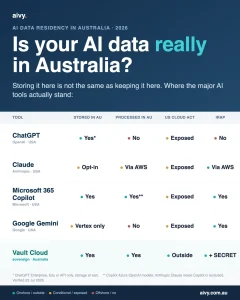
None of these tools publishes Australian data residency; Otterly.ai and Geoptie say they keep customer data in Frankfurt, and most of the rest are US companies. Under Privacy Act 1988 and OAIC guidance, this can be a compliance review point if you handle personal information. Read each tool's data processing terms and check whether your tracked queries contain client identifiable data.
Which GEO tools track Microsoft Copilot?
Otterly.ai, Goodie AI, Gauge, Scrunch, AthenaHQ and Profound include Copilot, and Geoptie, Peec AI and AIclicks let you choose it as one of your engines. HubSpot AEO and Writesonic do not cover it. Bing Webmaster Tools also reports Copilot citations for free.
Should I optimise for ChatGPT, Perplexity or Google AI Overview first?
Start with ChatGPT for most Australian business audiences, then Google AI Overview. Perplexity matters more in research heavy verticals like legal, finance and academic. Run the DIY audit across all three first to confirm where your specific buyers are searching before prioritising.
Do I need a developer to use a GEO tool?
No. Most GEO tools are no code platforms designed for marketing teams; setup takes one to two hours. Tools with API access like Gauge benefit from a developer for custom dashboards, but the core monitoring features work without one.
What is answer engine optimisation?
Answer engine optimisation, or AEO, is the same practice as generative engine optimisation: shaping content so an AI engine cites it in an answer. The label came from the SEO industry rather than from research. Compare what a tool measures, not what it calls itself.
What is LLM SEO?
LLM SEO is the informal name for optimising content so large language models quote it. It covers the same ground as GEO and AEO. Google states no special optimisations are needed to appear in AI Overviews, so treat any claim of a proprietary AI ranking factor with caution.
The bottom line for Australian businesses choosing GEO tools in 2026

The two things to remember are this. AI search visibility matters now in Australia, not in 12 months, and the field is unusually open compared to traditional SEO. Most of your competitors have not measured their AI visibility once, which means a 30 minute DIY audit puts you ahead of most of the market. Buying a tool only makes sense after you have run that audit and know what specific gap you are trying to close.
The verdict, by Australian business profile
Under 30 staff: run the free 30 minute DIY audit first. The gap is usually content, not tooling.
Starting from zero with a budget: Geoptie's Starter plan, with HubSpot's free AI Search Grader and the Bing and Search Console AI reports alongside it.
Mid market with a content team: Peec AI for ranked actions, Goodie AI for monitoring plus optimisation in one platform.
Enterprise, 200+ staff: Profound, but only once you can name the analyst who will own the dashboard.
A Melbourne accounting firm I worked with recently went through this exact process. They ran the DIY audit and found their brand was surfacing in zero of eight tracked queries inside ChatGPT, Perplexity or Google AI Overview. Their first move was not buying a tool.
It was rewriting two of their highest intent service pages with the answer first format AI engines reward. Six weeks later, three of the eight queries were citing them. They still have not bought a paid GEO tool, and they probably will not until they hit the ceiling of what manual auditing can deliver.
That is the framework. Audit first, fix content second, buy a tool only when you cannot measure the next layer manually. If you want help running the audit, fixing service pages, or scoping generative engine optimisation services for your team, that is what we do at Aivy.
We are an AI automation agency working with Australian businesses across legal, accounting, real estate and operations, and we run this audit as a fixed scope engagement.
Last updated: 2 October 2026. Tool plans, prices and engine coverage checked again on 1 October 2026.
• Aggarwal et al., GEO: Generative Engine Optimization · origin of the term and the GEO-bench benchmark, November 2023
• Google Search Central, AI features and your website · no additional requirements or special optimisations to appear in AI Overviews or AI Mode, and AI Overviews only show when judged additive to classic Search
• Privacy Act 1988 · the obligation behind the data residency criterion for tools handling personal information
• OAIC guidance on commercially available AI products · privacy expectations when routing prompts through third party AI tools
• HubSpot AI Search Grader · the free one off visibility check, formerly the AEO Grader
• Google Search Central, generative AI performance reports · AI Overviews and AI Mode impressions in Search Console, for all sites from 31 August 2026
• Bing Webmaster Tools, AI Performance · Copilot and Bing AI summary citations, public preview since February 2026
• Google I/O 2026 keynote · AI Overviews above 2.5 billion and AI Mode above 1 billion monthly users
• Google Australia, AI Mode launch · AI Mode live in Australia from October 2025
• OpenAI, expanding access with ChatGPT ads · more than 1 billion weekly active users, 31 August 2026
• Tool plans and engine coverage: each vendor's own pricing page, read 1 October 2026. None publishes an Australian price; US dollar prices are converted at the RBA rate of 22 September 2026 (1 Australian dollar = 0.7123 US dollars).